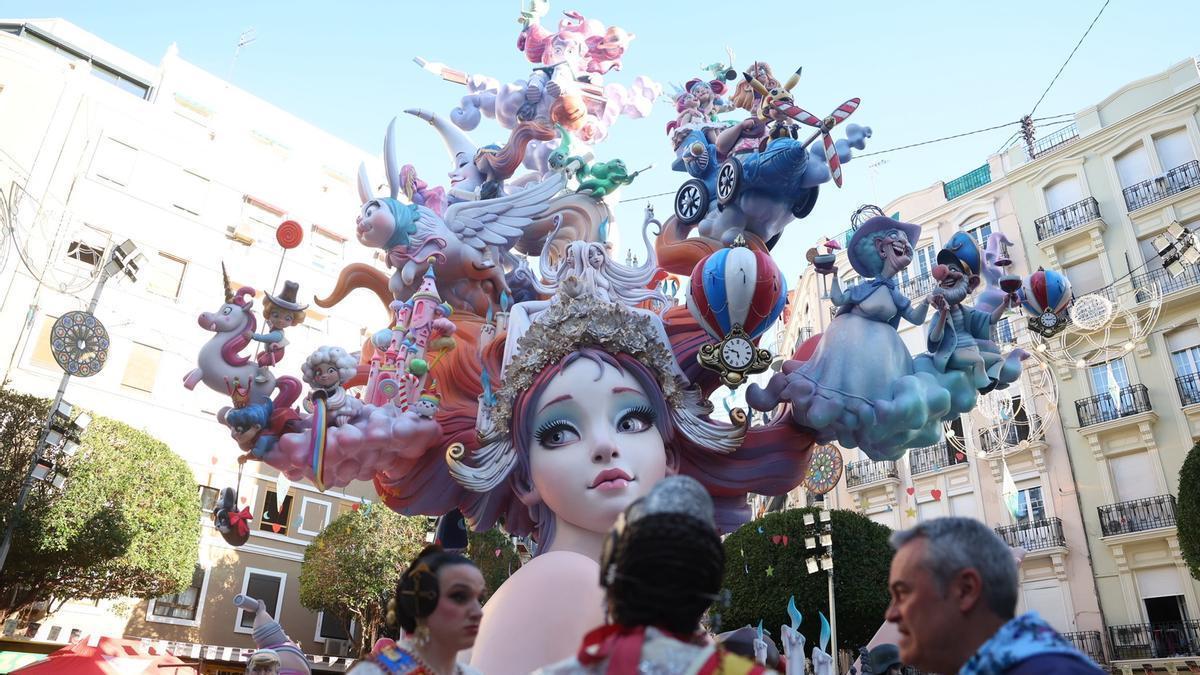
Fallas 2026 - Nieuws!

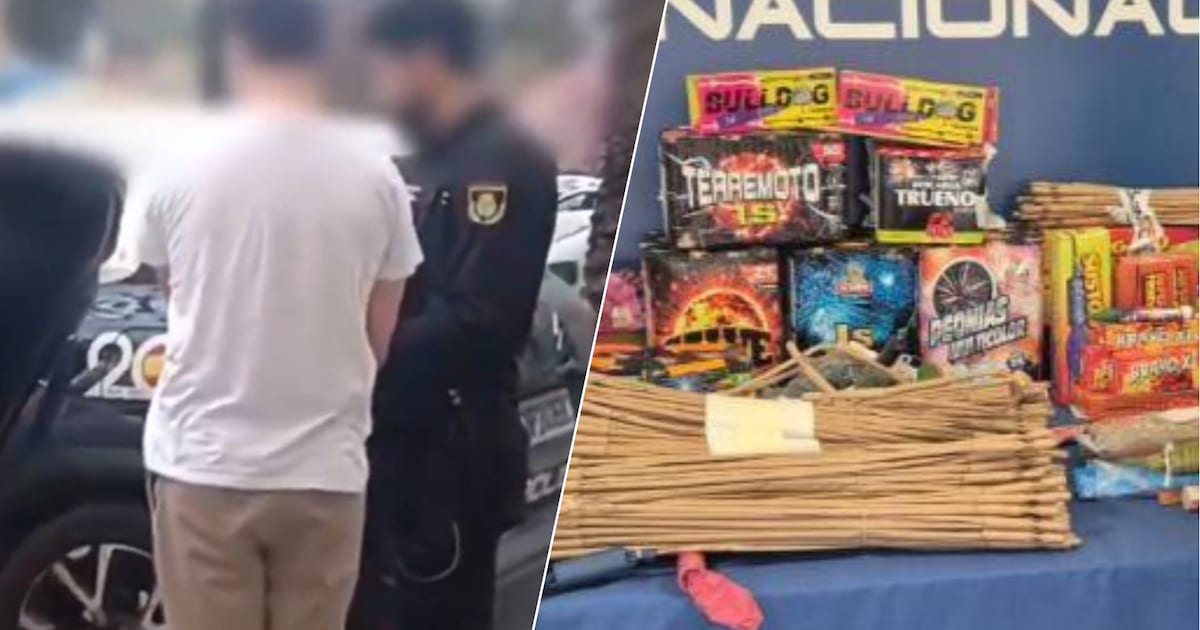
And, for the first time, after activating international cooperation, the National Police has included six agents of the Dutch Politie - some in uniform and others, not -, to the discomfort of the suspects, who did not expect to run into their own police in Valencia and whose help has been fundamental in this mission.

Praatje gemaakt met een van die geuniformeerde Nederlandse agenten. Volgens hem tijdens Fallas ‘27 ook Polizei van de partij.
 
Laatst bewerkt:
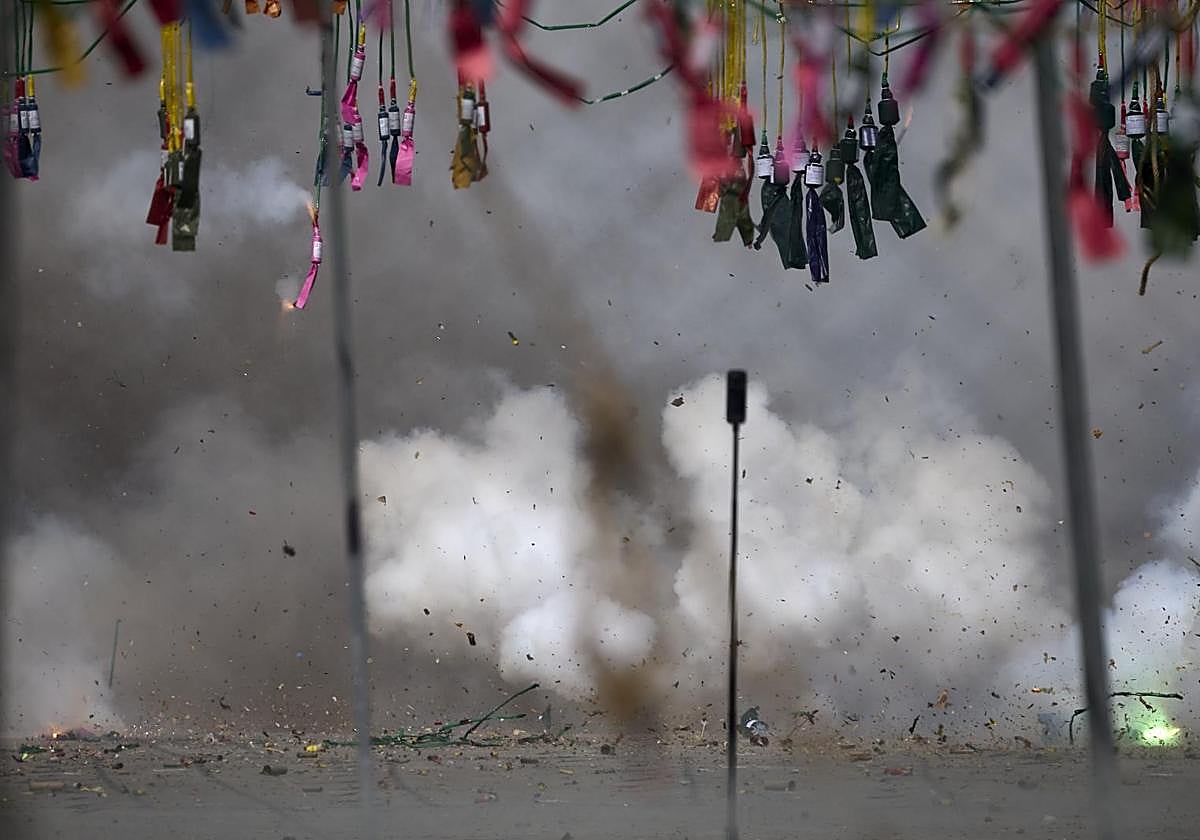
The last mascletà of the Fallas is shot this week on Ibiza by Hermanos Caballer

The gunpowder calendar continues its course and this week it has a new appointment not far from Valencia

—-

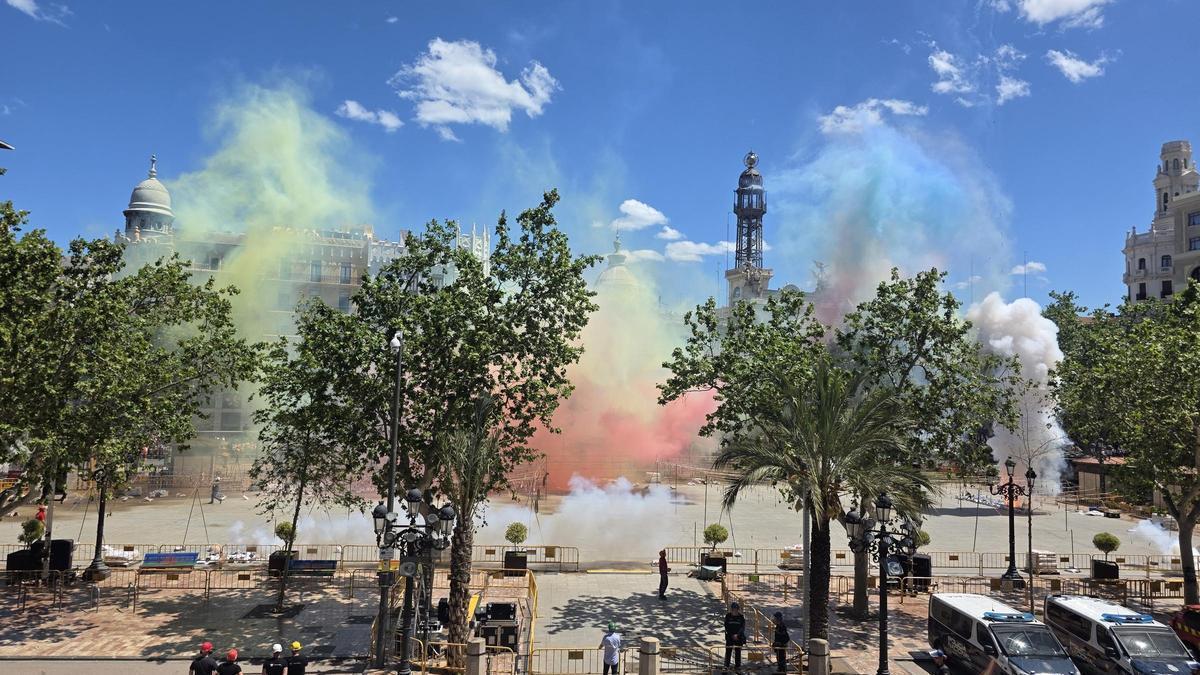
The Fallas 2026 have ended and there are many who are already counting the days that remain to enjoy a good pyrotechnic show again. The gunpowder calendar continues its course and this week it has a new appointment outside Valencia. Thus, the next mascletà is scheduled for April 28 in San Antonio de Portmany (Ibiza), and will start at 1 pm.

The meeting will be attended by the councillor of Fallas, Santiago Ballester, and the major Fallera of Valencia, Carmen Prades, with her court of honour. They will do so on the occasion of the 25th anniversary of the fallas of the Ibizan municipality of Sant Antoni de Portmany. The town will celebrate its particular Falla weekend as they have been doing for the last 25 years. It will begin on Friday, March 27 with the plantà; on Saturday it will be the traditional flower offering to the Mare de Déu and the mascletà; and it will end on Sunday with the crema.

The pyrotechnics that will sign the show will be Hermanos Caballer, who always bet on classic and very powerful mascletas.


Tientallen jaren cel? Wat een gelul weer. Vorige week ‘slechts’ 3,5 jaar geeist voor het bestoken van een agent, en dan ook nog met zware zelfbouw. Kutkrant.
 
IMG_0672.webp

The vestiges of the Fallas 2026 disappear: goodbye to the fence of the "mascletà"

The Central Falla Board reminds the commissions of their responsibility in the removal of lights and banners from the public road

———

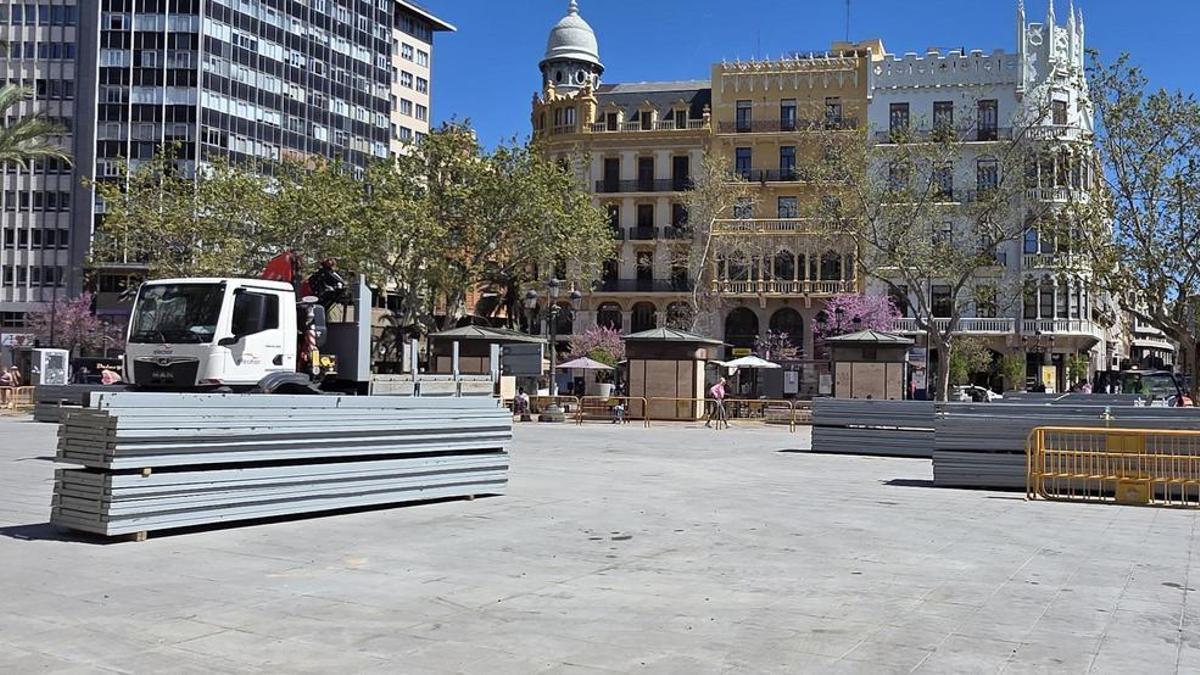
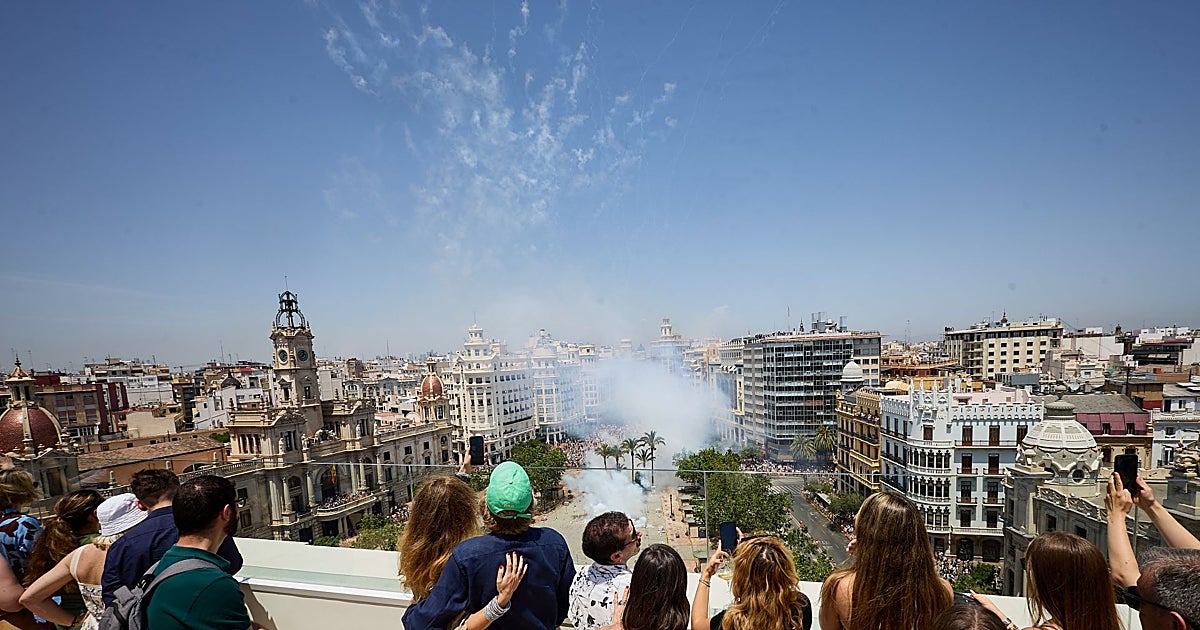
The Fallas 2026 continue to disappear from the city map. This Wednesday, the removal of the last elements of the fence of the "mascletaes" has been carried out, which served as protection for the attendees of the shootings held in the Town Hall Square. The complex system, formed by modules, has been disassembled piece by piece and has finally left the centre of the square expeditious.

In the rest of the city there are still quite a few elements, especially lighting, both garlands and signs and the large fastening poles. These elements have the days counted more methodically, because it is material owned by the lighting companies and they are carrying out its phased removal.

It is more complicated to remove the "senyeras", since this is done by the commissions themselves, which must meet again and take out the stairs to proceed with their elimination.

The Central Board of Falla has reminded the commissions that the Bando de Fallas points them out as "responsible for the fact that, as soon as the period of the Fallas ends, the municipal public or private domain is free of waste derived from its celebration and in optimal conditions for its normal use to resume."

Previously, the tents did disappear - it is the main priority, under penalty of sanction - and, subsequently, all the elements of the activity areas, such as high fences and support bases, as well as the unused sand. There are still fences delivered by private companies, and which they are also slowly removing.

The "cage" of the "mascletà" began to be mounted on January 29, so it has been part of the urban landscape for two months. The pyrotechnic shootings that are held in the municipal square - from which the protective visor of the balcony has already disappeared - will take place without this protection, but keeping the safety distances.

 
De restricties rondom het afsteken van vuurwerk bestaan al geruime tijd in Valencia. Dat is niks nieuws onder de zon.

In principe heb je alleen de vuurwerkzones van de cassals/Falla commissies waar je mag afsteken. Er wordt echter veel gedoogd, zolang je maar normaal blijft doen en een normaal plekje zoekt waar je geen gevaarlijke situaties veroorzaakt.

Wat wel nieuw is dat ze afgelopen jaren meer en meer vuurwerkoverlast van onder andere Nederlanders en Duitsers ervaren. De gevaarlijkste toestanden op onder andere Palau hebben het nieuws meermaals gehaald. Ze handhaven daarom een stuk strenger.

Tussen 23:59 en 7:30 (en zoals hier boven lees tijdens de hoofdweek kennelijk 2:00 en 7:30) maar ook van 9:00 tot 10:00 en tussen 15:00 en 17:00 zijn in principe vuurwerk vrije tijdslots voor het zelf afsteken.
Ze worden aangemerkt als terroristen heb ik gelezen in een artikel voor Fallas. Lijkt mij een zeer goede zaak en geef maar een statement af!
 
More education and more controls against illegal firecrackers

The sector, neighbours and the Local Police believe that more awareness and more information are needed so that tourists know how and when to throw masclets, and more authorised areas

———

More education and more controls. The solution may seem simple and even typical, but it is the main conclusion of a long three-way conversation organised by LAS PROVINCIAS in which Nicolás Magán, manager and technical director of the Spanish Association of Pyrotechnics (Aepiro); the local police officer and delegate of the Professional Union of Local Police and Firefighters in the City Council of Valencia Felipe de los Ángeles; and the vice president of the Federation of Neighbourhood Associations of Valencia, Toni Pla. Although the year has been quieter, the three agree that informative work must be done, especially with tourists, and raise the need for firecracker launch areas beyond those authorised to the commissions, while residents insist on respecting the Falla side and the Local Police, in the lack of means to serve a city that receives almost one million visitors for five days.

In everyone's memory, and in fact it comes out on several occasions during the conversation, is what happened last year. It was close to midnight from March 18 to 19, 2025 when an immense cloud of smoke rose over the riverbed, in some enclave located in front of Zaidía. It was a pyrotechnic device that looked more like a bomb. The scare was capitalised, especially in a partying city in which thousands of Falleros left the Offering and crossed the river towards the left bank, from where they would return to their farmhouses. Two days later, the same thing happened in Tomás de Montañana, where the explosion also left a crater more than a metre in diameter. The situation was so worrying that exceptional measures were taken. 2026 has been the year in which police work has paid off: there have been fewer complaints and fewer seizures of illegal material. However, once the bombs have been eradicated, almost entirely, the problem is again the discomfort generated by firecrackers, especially in those who work or want to rest while the rest celebrate. All this aggravated by the whims of the calendar, which this year has left a Fallas of almost a month from February 22, day of the Crida, until March 19.

Magán opens fire, never better said, and explains that this year "more preventive controls have been made and psychology has also been done when establishing schedules of use, especially of the Fallas commissions, of the neighbours." "And it is true that we have seen that the issue of pyrotechnic tourism has decreased, which these years ago had been a big problem," he adds. Toni Pla tercia: does not fully agree on the issue of schedules.

"The city continues to run, the city has to cover many tourists and what we can't do is have a city on fire, in quotes, on all sides. It is true that the use can be corrected, little by little it is being done. It is true that the Local Police also plays a very important role in education also in schools for the use of pyrotechnic products, but one thing is the use and another is the abuse," he says. He is the first to raise the issue of the extension of the Fallas, which this year have begun with the Crida of 22 and have ended almost a month later. "Citizen awareness does not raise that it cannot be that on February 22 you can throw firecrackers down the street like crazy," he says.

The mascletà, the big problem and also the great blessing

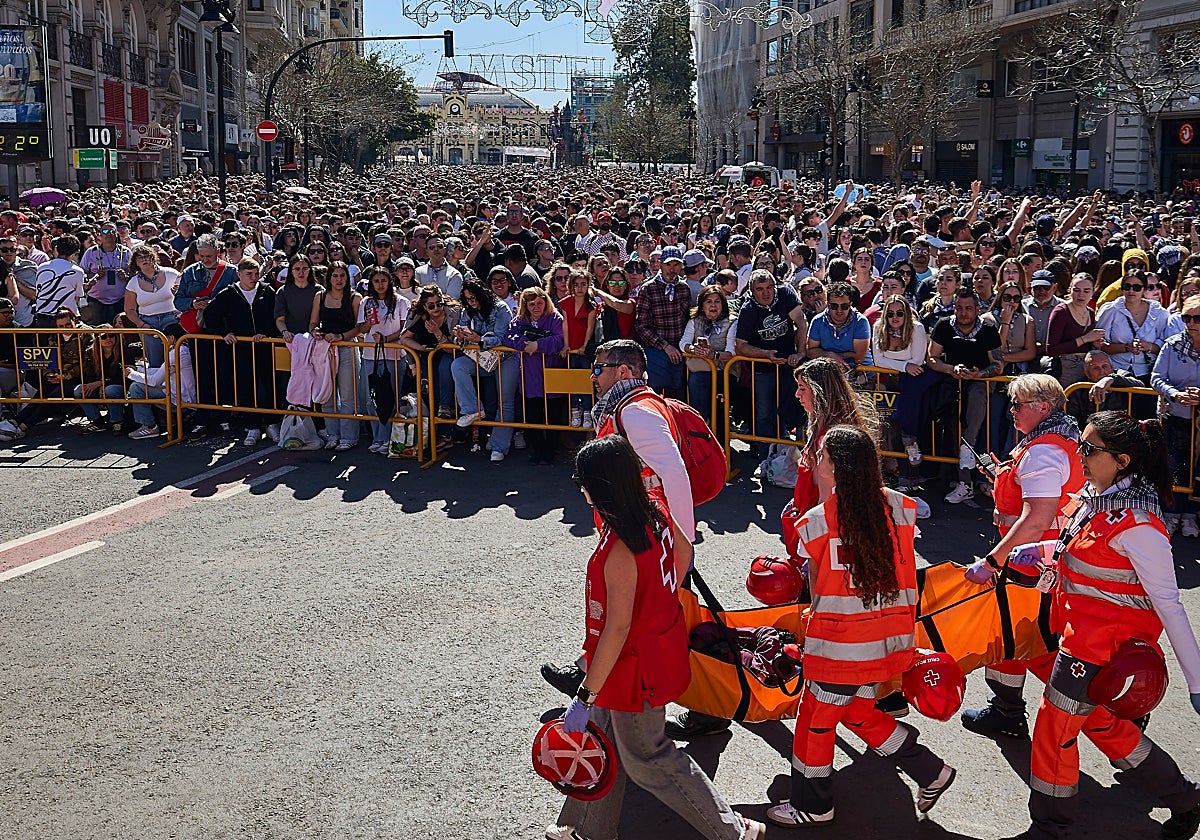
It is not on the table to move the mascletà from the Town Hall square, but it does involve some problems of agglomerations that this year have been tried to solve with the cut of rail traffic. Magán, Pla and de los Ángeles are not in favour of his transfer, but they are in favour of controlling the flows. "From a police point of view, it is easier to have all the people controlled in one place," he says. Pla assures that the people who come from the 13th or 14th are not from the city, "because they are in their casals," and slips that the castillos have already moved to the Turia Garden. "The Town Hall Square has very, very specific conditions that you lose if you take it out of there," says Magán.

De los Ángeles assures that the shooting at all hours of pyrotechnic material "is a reality, and as much as in theory they are delimited to areas of fires requested by the Fallas commissions, that is not a reality because there is a lack of means and control because the police goes as far as they go." The three interveners assure that the problem is not the falleros. "The one who throws a masclet at 3 in the morning is not a child, or the one who throws a shell in the middle of the river," he says.

"There have been fewer problems than in other years, it is true, but the truth is that this type of product is not for sale. Where do they get them from? We have to follow up," says Pla. "I don't know if they bring it from Germany or if they are remnants of other shows...", he slips. Magán denies it completely. "All the products are traced," he says.

And we go straight into a key issue, tourists. There is a Falla reglement that stipulates when and where firecrackers can be thrown. Why don't they follow him? "Maybe it's a problem of diffusion. Should we put up signs on the street? I think so. It's like when you enter the city and they put a sign of the speed at which you have to go. It's not just regular, you also have to spread the word," says Magán. "The one who comes from outside for the first time to Valencia has no information," he says.

In-store training

Pla points out that this training can take place in the stores where firecrackers and wicks are purchased, and Magán says that it is already done. In this regard, Pla insists that the reservations that the Federation has regarding firecrackers do not go against the culture. "We love mascletaes, palos castles... but can you imagine going sightseeing to a country and starting to buzz firecrackers everywhere?" insists the neighbourhood leader, who adds that traditions are culture, "but they also have to adapt to the social reality we live in." "Not because before it was cultural to throw people to the lions we are going to continue doing it," says, eloquently, the neighbourhood leader.

Would the experts be in favour of a delimited space to throw firecrackers, as is done in Paterna? Not quite. "You have to look for an open and adequate space according to what you are going to throw as well. There are some safety distances that have to be met, you can't throw a masclet where there is an agglomeration of people, but that's common sense. Like shells, which cannot be used," Magán insists. De los Angeles assures that if there was that space, more police would be needed to control it. Within the Fallas commissions, the use made of pyrotechnics is much more responsible than any other group," says the agent, who explains that the commissions have a cultural agenda "and they can't be shooting firecrackers all day." "The problem we see in Ruzafa, for example, is that there are many tourists who throw firecrackers at a specific intersection because they don't know where to do it," says the agent.

We are still on time and the positions, as this debate shows, are not so far from each other. The Falla reglement negotiations will begin shortly and issues such as controls, education or delimited areas for launching firecrackers will be on the table.

 
Laatst bewerkt:
Back
Bovenaan